We’ve all watched a lot of Olympics over the past couple of weeks. It is apparent that while the US may not be dominant in running, especially distance running, we are dominant in gymnastics.
After watching this video, I’ve decided it’s because the parents of US gymnasts are so much better than the parents of runners.
Next time you’re at a high school cross country meet, notice the parents quietly sipping coffee and cheering as their kids toil past. Perhaps if these same parents were a bit more intense the kids would try a little harder.
You may have noticed it gets hot during the summer in Sacramento–and the rest of interior California. For the most part, you can adapt to running in the warmer weather.
It gets more challenging when the air is still, or there are wildfires upwind, and the air quality in the Valley begins to degrade.
This summer, we’ve been fortunate to have so few bad air days–with only a handful of Spare the Air Days, so far.
What, exactly, is air pollution and what does it mean for me?
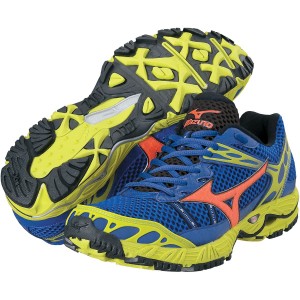
Some have theorized that there is a perfect trail running shoe. Is this possible? They would be nimble yet sturdy, soft and grippy in the mud but stiff enough to protect from the assaults of sharp rocks.
It would be a miracle to find all this in one shoe, and that is probably why I keep several in rotation.
I have kept a pair of the Wave Riders on hand for the past year or so, but I was unfamiliar with what Mizuno has to offer for the trails. I was recently offered a free pair of Mizuno shoes through their Mezamashii Project, so I decided to try something I hadn’t run in before—like the Wave Ascend 7.
Today’s lunchtime run was easily the hottest run of the year and the crisp training days of autumn still seem like an impossible dream.
With that in mind, it is difficult to come to terms with the fact I need to be deciding, right now, whether or not to register for a December marathon.
Difficult or not, that is what we are faced with as the folks at the California International Marathon are reporting they are about 90% full, as of today.
The CIM continues to fill way faster than last year! Marathoners entered as of 8/9/2012 = 7,026; marathon entry limit = 8,000. Although the entry fee increase deadline was a reason, we had more than 800 people enter last week alone! Daily entries continue to be higher than last year… so… dare we say, “Do the math.”? We will say, “Enter sooner than later to avoid disappointment!”
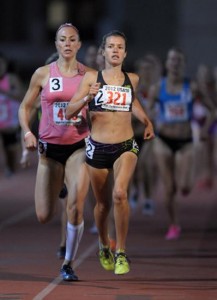
Former UC Davis standout Kim Conley, who now runs for the Sacramento Running Association’s Elite Team, ran a personal best Tuesday in the first round of the women’s 5,000 meters at this year’s Olympic Games, but failed to advance to the final.
Conley finished 12th in the second heat with a time of 15: 14.48–well ahead of her 15:19.79 previous best set six weeks ago at the U.S. Olympic Track and Field Trials in Eugene.
Conley’s teammates Julie Culley and Molly Huddle both advanced to the final, which will be run on Friday and shown at some completely random time on NBC.
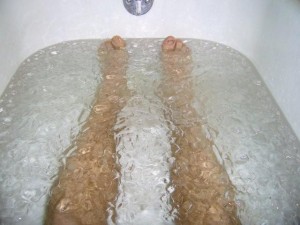
A couple of years ago, word got around that non-steroidal anti-inflammatory drugs (AKA NSAIDs, AKA ibuprofen, etc.) might actually be interfering with the healing process so we all became ice bath officionados.
Now, we learn that maybe icing isn’t such a great thing to do, either!
I know we were all focused on the women’s Olympic Marathon and Saturday’s phenomenal 10,000 meters (Rupp!!), but there were some local people actually out there running their own races this weekend.
If you wanted to run with (or without) your dog, the Kaleo 5K looks like the place to have been. Michael Carlone took the overall win in 18:36. Jamie Styles and Justin Flowers rounded out the top three men in 19:01 and 20:07, respectively.
The top woman was Kristi Capello, in 20:29. Following her in for second and third were Katie Madaus and Christina Applegate in 21:46 and 21:50.
There is no word in how the dogs finished. Complete results are here.
A couple of months ago, I wrote about a study published in the Journal of Applied Physiology that purported to have found the secret sauce for training.
You could, the authors say, knock some serious time off your races by reducing your mileage and running some short, but crazy-fast intervals.
While interesting, I wondered, really, was there something new under the sun? How different was this from normal interval training?
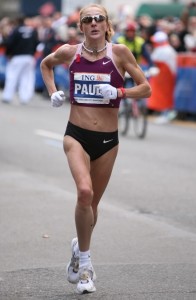
There have been rumors swirling that Paula Radcliffe’s Olympic hopes were fading due to a painful foot injury.
I have long been a fan of Radcliffe, and I must admit, I’ve been clinging to the hope that this lioness of the sport would finally get her chance for Olympic glory.
Alas, this was not to be. Announcing her withdrawal from the games, Radcliffe released a statement on Monday that was as classy as the woman herself.
This mouse will live longer and better than her lazy cousin!
In the press recently, there have been a number of stories about the possible dangers of too much running.
I generally ignore these because a casual observation yields plenty of data indicating we, as a nation, are suffering tremendously from a lack of exercise.
Fortunately for us, Paul Williams is around to reinforce our world view. He hasn’t seen a downside to lots of running, and he’s looked at a lot of runners.
Williams is a researcher at the Lawrence Berkeley National Laboratory and is in charge of the worlds largest and longest study of runners.